

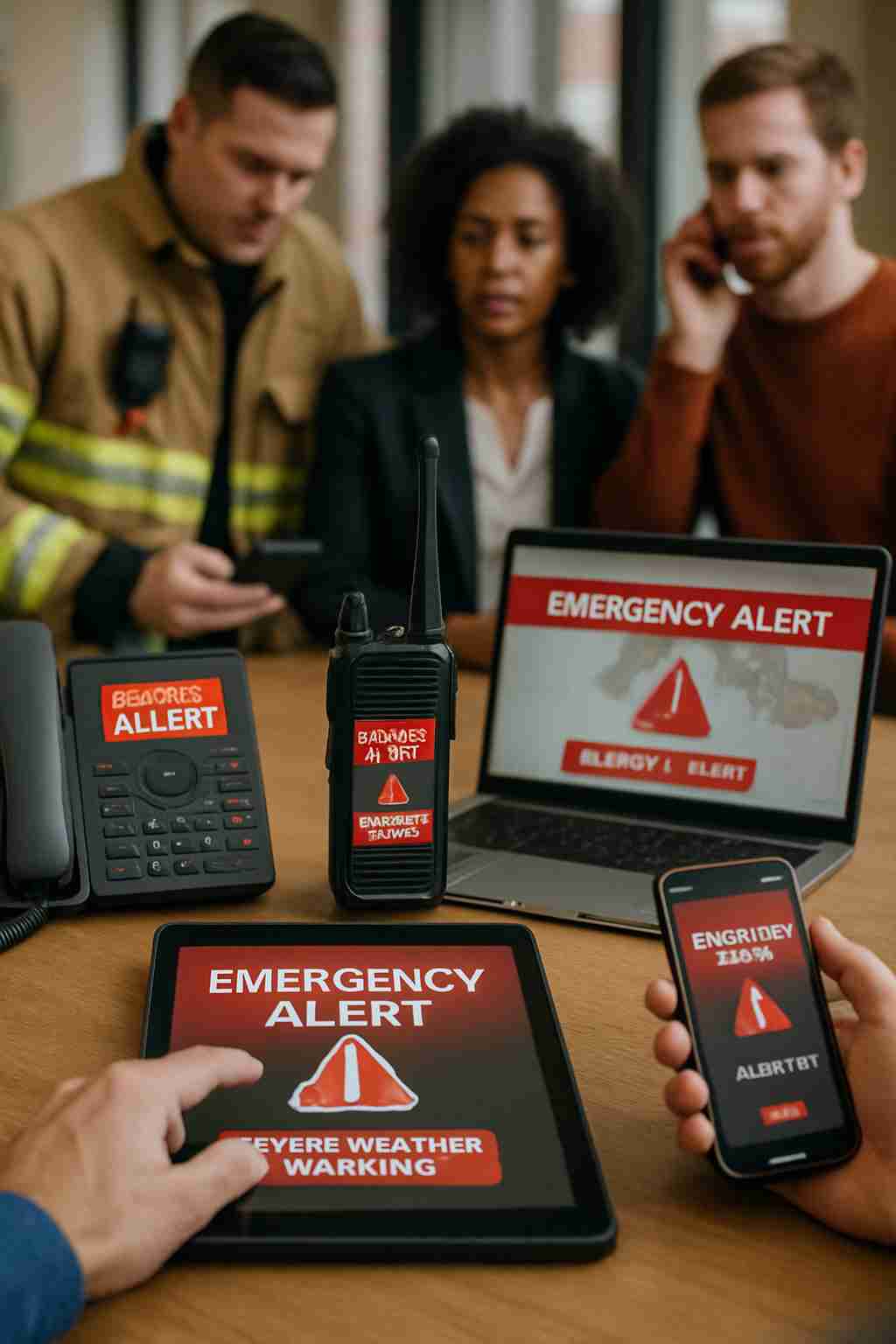
In our rapidly moving society, having the capability to convey information quickly and efficiently during crises is essential. This piece examines key crisis management technology—emergency communication systems, crisis communication software, emergency notification systems, and incident management software—illustrating how they revolutionize response operations and protect populations.
The Role of Emergency Communication Tools in Crisis Management
During critical moments, emergency communication systems become essential for protecting both lives and assets. Ensuring rapid transmission of crucial information during events such as natural catastrophes, public health crises, or security threats is their key function. The importance of these tools is highlighted by real incidents like Hurricane Katrina, where inadequate communication worsened the situation. Moving from age-old radio setups to modern disaster response software represents a major advancement in crisis management. Contemporary emergency communication systems provide live emergency notifications and facilitate coordination vital for first responders working in turbulent environments. Thanks to fast technological progress, today’s platforms allow clear and immediate transmission, reducing the confusion that once affected older methods. Speed, accuracy, and dependability remain critical to ensure every participant obtains precise data without delay. Such tools enable teams on the ground to make confident decisions, safeguarding communities and limiting harm. As institutions gear up for upcoming emergencies, the importance of reliable communication technology in enabling prompt responses and unified efforts is undeniable.
Exploring Crisis Communication Software for Organizations
For organizations managing emergencies, adopting crisis communication technologies proves essential to ensure uninterrupted critical operations. These platforms assist companies in rapidly sharing information with their personnel, protecting both employee safety and organizational continuity during turbulent times. With features such as automated emergency notifications, businesses are able to deliver prompt updates to all parties involved, helping to clarify situations and ease uncertainty in moments of crisis.
These tools also enhance efficiency through integration capabilities, seamlessly merging with existing infrastructure. By interfacing with HR systems, email platforms, and communication applications, these solutions simplify exchanges and reduce delays in spreading imperative information. Another key advantage is the provision of live emergency notifications, enabling leaders to make confident and swift decisions backed by up-to-the-minute data.
Popular platforms like Everbridge, Alertus, and OnSolve exemplify comprehensive crisis management platforms. They support sound decision-making by supplying vital insights and boosting response times. Their ability to integrate with various operational technologies guarantees organizations keep their emergency communication tools current and fully functional. Ultimately, these innovative emergency communication systems strengthen organizational resilience, uphold brand integrity, and sustain stability—all while maintaining the critical connectivity required to endure any challenge.
Understanding Mass Notification Systems
Mass notification systems play a crucial role in rapidly spreading essential information to vast audiences across both private and public sectors. To guarantee timely alert delivery and a wide reach, these systems incorporate various communication channels like email, SMS, and voice calls. Depending on the urgency and type of message, automated crisis communication targets particular groups such as employees, students, or the wider community.
One significant benefit of these platforms is their capacity to offer instantaneous crisis communication during emergencies, supporting well-informed decision-making. For example, during hurricanes and other natural catastrophes, evacuation routes and safety guidance are sent directly to affected residents, greatly reducing confusion and disorder. Similarly, in academic settings, mass notifications keep faculty and students updated on security threats, helping to limit panic and improve overall safety.
Instances of their impact include Hurricane Sandy, where coordinated large-scale evacuations were made efficient through emergency notification solutions. By using multiple communication channels, these platforms close the gaps left by conventional methods, ensuring vital information reaches the intended audience right when it matters most. For further details about emergency communication tools and best practices, seek advice from reputable experts. Ultimately, mass notification systems provide essential reliability and adaptability in today’s volatile environment.
Emergency Alert Systems: Bridging Communication Gaps
In urgent situations where every moment is crucial, crisis notification systems play an essential role in linking authorities to the public, ensuring prompt communication. Governments and local organizations rely on these indispensable emergency communication tools to broadcast warnings about imminent dangers like severe weather or public safety threats. The variety of alert categories—ranging from weather advisories to AMBER alerts—underscores the importance of a robust, comprehensive technological framework.
Supporting these warnings is a complex web of technologies including GPS, cellular networks, radio frequencies, and internet protocols that guarantee fast and reliable message delivery to the right audiences. To maximize efficiency and coverage, systems must be compatible across various devices and regions, facilitating seamless transmissions via smartphones, radios, and televisions. This compatibility goes beyond convenience; it is critical, especially in disaster-prone zones.
By closing communication gaps, these urgent warning platforms provide communities with vital information and help coordinate effective response efforts. Fundamentally, their function as emergency communication tools is central to protecting populations from unexpected crises.
Harnessing Incident Management Platforms for Effective Response
Incident management software has revolutionized how agencies coordinate during emergencies by enabling seamless collaboration through state-of-the-art capabilities. Offering a comprehensive array of tools for incident logging, resource monitoring, and strategy development, these platforms are essential for managing varied operational challenges amid a crisis. One hallmark of an effective incident management system is its capacity to produce up-to-the-minute incident reports, keeping everyone informed with current emergency status reports to support sound decisions. Another fundamental aspect is the strategic crisis resource management it provides, ensuring personnel and equipment are optimally assigned to the areas that need them most. By streamlining intricate logistical tasks, these solutions reduce response times and amplify the effectiveness of interventions.
In addition, after-action analysis tools are crucial for assessing how well response efforts performed. Agencies can enhance future emergency plans and refine their tactics by closely examining data and results. Serving as centralized hubs for communication and coordination, these platforms integrate flawlessly with emergency communication tools. Leveraging such sophisticated disaster response technology guarantees that all participants act decisively and efficiently, ultimately boosting the success rates of emergency operations.
Conclusions
Integrating state-of-the-art emergency solutions and communication tools into disaster response plans is crucial for proficient crisis management. Organizations and authorities can guarantee coordinated, timely actions that reduce damage and protect communities by adopting and utilizing these technologies. Equipping decision-makers with such systems provides them the essential information to handle complex emergencies effectively.