

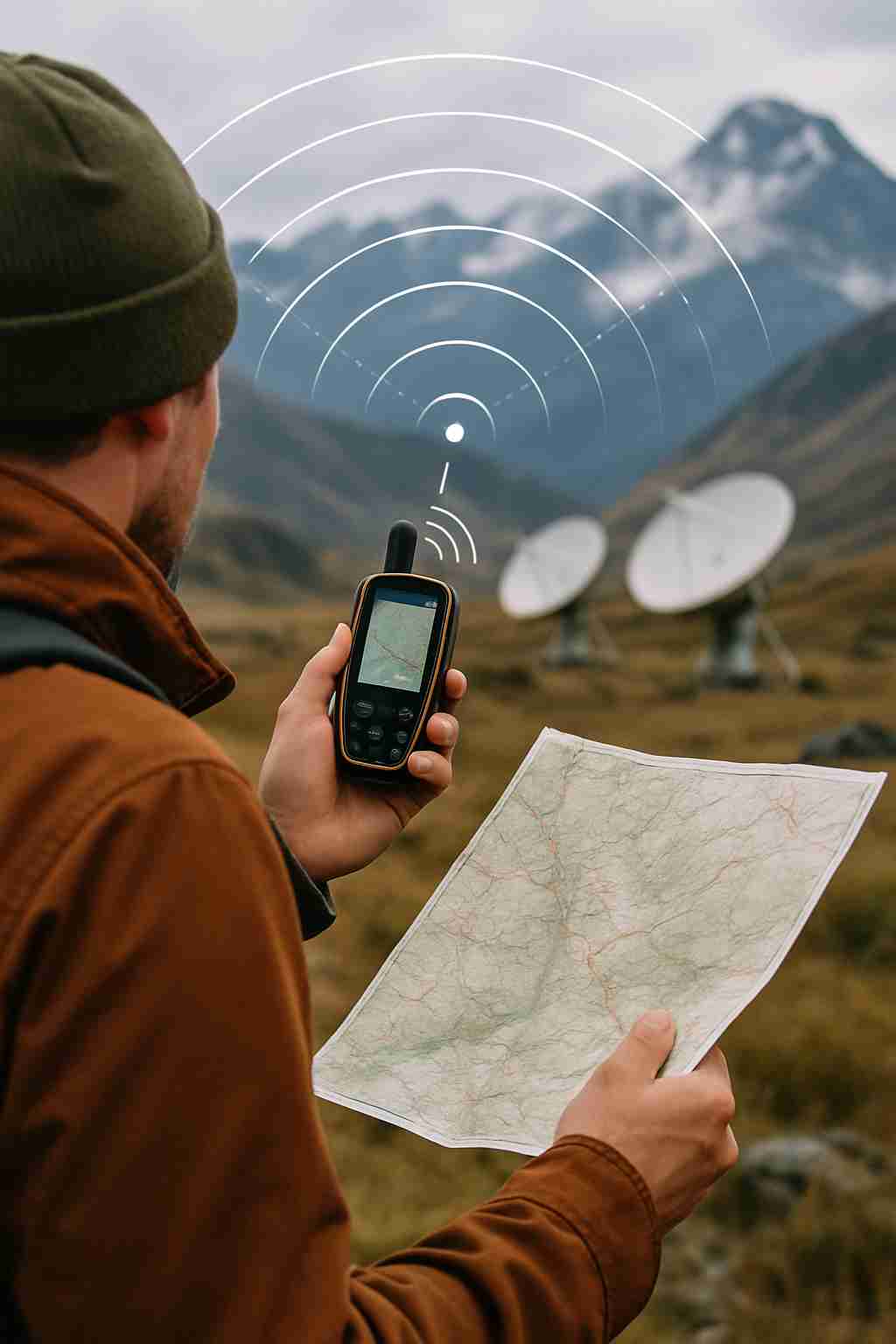
As more people embrace outdoor excursions and telecommuting, wireless GPS tracking units have become indispensable. These gadgets, such as satellite connectivity solutions, LoRa-based navigation systems, and off-grid communication devices, guarantee navigation and autonomous asset control even when standard networks are unavailable. Explore how these innovations are revolutionizing travel and logistics in isolated areas.
Unpacking Off-Grid GPS Tracking
In the sphere of off-grid GPS tracking, devices function autonomously from cellular networks, guaranteeing precision and dependability even in far-flung regions. These setups are vital for logistics operators, outdoor enthusiasts, and those working in isolated locations. By leveraging global satellite communication systems, they deliver exact location information, allowing users to navigate and oversee assets where conventional networks fail.
Essential elements consist of GPS receivers, sturdy antennas, and software designed for mapping and tracking. Numerous units also boast GPS devices with prolonged battery performance and weatherproof GPS tracking units, which are critical for enduring the tough environments these routes often present. For example, companies managing remote construction projects or hikers journeying through secluded mountain terrains depend on these instruments for both safety and operational effectiveness.
Sectors like outdoor recreation profit by providing live satellite monitoring of trails and landscapes, whereas resource management fields obtain accurate tracking solutions for remote environments. The introduction of off-grid GPS tracking marks a paradigm shift in how we view and apply technology for distant location navigation tools, ensuring connection even beyond the bounds of civilization.
Satellite GPS Trackers: Reach Beyond the Limits
When exploring areas beyond the scope of traditional networks, satellite GPS trackers serve as the fundamental link to connectivity. These satellite-based GPS tracking units depend on expansive global satellite networks to deliver unmatched coverage over expansive and isolated regions. Leveraging satellite power, they enable instant satellite tracking with dependable consistency, no matter the environment, guaranteeing that both people and valuables remain effectively supervised at all times.
A key highlight is their powerful satellite-enabled SOS functionality. This essential feature empowers users to transmit distress alerts from nearly any spot on Earth, greatly enhancing safety for explorers and those working remotely. Designed to endure tough conditions, the underlying technology offers resilience against severe weather, water intrusion, and physical impacts—making these devices essential companions for those venturing into unpredictable wilds.
Operating these satellite GPS trackers smoothly requires a sophisticated interplay among various satellite networks, which ensures uninterrupted data transmission even in the most inaccessible parts of the world. Compared to network-dependent solutions, satellite communication systems provide superior durability and precision, especially where accurate, real-time updates are critical. Consequently, these trackers form an indispensable part of maintaining smooth functionality and ensuring security in untamed terrains.
Leveraging LoRa GPS Trackers for Asset Management
Utilizing LoRa-based navigation systems offers an innovative approach to asset management across vast and remote regions. Known for their low wattage GPS tracking solutions and long-range communication abilities, these devices are particularly well-suited for sectors that demand broad surveillance without frequent servicing or swapping out. By employing Long-range radio technology for navigation, these trackers send data using low-frequency radio signals over large distances while consuming minimal power. This makes them exceptionally suited for off-grid GPS tracking uses, where maintaining up-to-the-minute location information is essential but often challenging with conventional systems.
In the realm of logistics and vehicle tracking and fleet management software, LoRa communication trackers simplify processes by guaranteeing asset visibility across extensive geographical zones without dependence on expensive satellite communication systems. Their capability to work seamlessly with current management platforms boosts operational productivity, delivering critical real-time data on asset whereabouts and status. Nevertheless, despite their notable advantages in range and affordability, LoRa trackers do have drawbacks. They might not match the worldwide coverage provided by space-based communication devices and can be hindered by regulatory compliance and regional laws.
Still, integrating LoRa GPS trackers into off-grid GPS tracking strategies remains a persuasive method to enhance asset management where traditional networks prove inadequate.
Essential Off-Grid Communication Devices
Integrating off-grid GPS tracking systems with satellite communication equipment significantly boosts safety and connectivity, especially in isolated regions where conventional networks fail to reach. Satellite phones stand out by offering dependable communication in even the most secluded locations, functioning without reliance on terrestrial infrastructure, making them vital for remote expeditions.
Satellite messengers serve as complementary satellite transmission tools designed for users who prefer more affordable options for fundamental communication needs. They provide the ability to send GPS coordinates and text messages, providing reassurance to both explorers and those monitoring them. Their emergency SOS satellite devices features are literally lifesaving, allowing rapid assistance requests when emergencies arise in wilderness areas.
Moreover, these remote location communication equipment integrate effortlessly with off-grid GPS tracking systems, filling connectivity gaps where cellular networks fall short. This fusion not only improves safety but also streamlines the overall remote asset management of expeditions. Thanks to these essential devices, users stay connected, informed, and ready for any challenge.
Navigating Remote Areas: Choosing the Right Equipment
Selecting the appropriate gear for off-grid GPS tracking is vital when facing the hurdles of remote areas. A journey can either be clouded by doubt or enhanced with safety and clarity depending on your choice of equipment. For everyday hikers, portable GPS units for trekking provide ease of use and affordability, striking a balance between user-friendly interfaces and satisfactory battery life. Devices like the Garmin eTrex deliver essential navigation features without overwhelming users with unnecessary functions.
Explorers at the professional level often focus on longevity and toughness. Garmin GPSMAP 66i, for example, combines space-based communication devices to handle emergencies in unforgiving terrains. Meanwhile, those managing logistics favor platforms equipped with autonomous asset oversight capabilities. Premium models come with high-capacity battery GPS systems, live satellite monitoring, and advanced data handling designed for nonstop use over expansive regions.
In the end, pinpointing your particular requirements—from simple directional guidance to sophisticated asset coordination—is fundamental. The top remote GPS tracking devices for off-grid GPS tracking are those that seamlessly meet your activity’s demands, ensuring technology reliably bolsters your adventurous or operational missions far from civilization.
Conclusions
Wireless GPS tracking units, such as satellite communication systems and LoRa-based navigation systems, provide vital connectivity in distant locations, ensuring secure navigation alongside efficient autonomous asset control. Users can greatly improve their efficiency and safety in areas lacking conventional network services by choosing devices suited to their unique requirements. These space-based communication devices are continually evolving, delivering increased dependability and broader accessibility globally.