
The way we navigate and track targets across vast landscapes has been transformed by GPS tracking. Utilizing state-of-the-art technologies like LoRa mesh network monitoring, devices such as the SpecFive Trace GPS Tracker deliver dependable, live GPS position tracking with impressive range. This piece delves into these advancements, emphasizing strategic GPS solutions and remote navigation equipment.
The Power of Off-Grid GPS Trackers
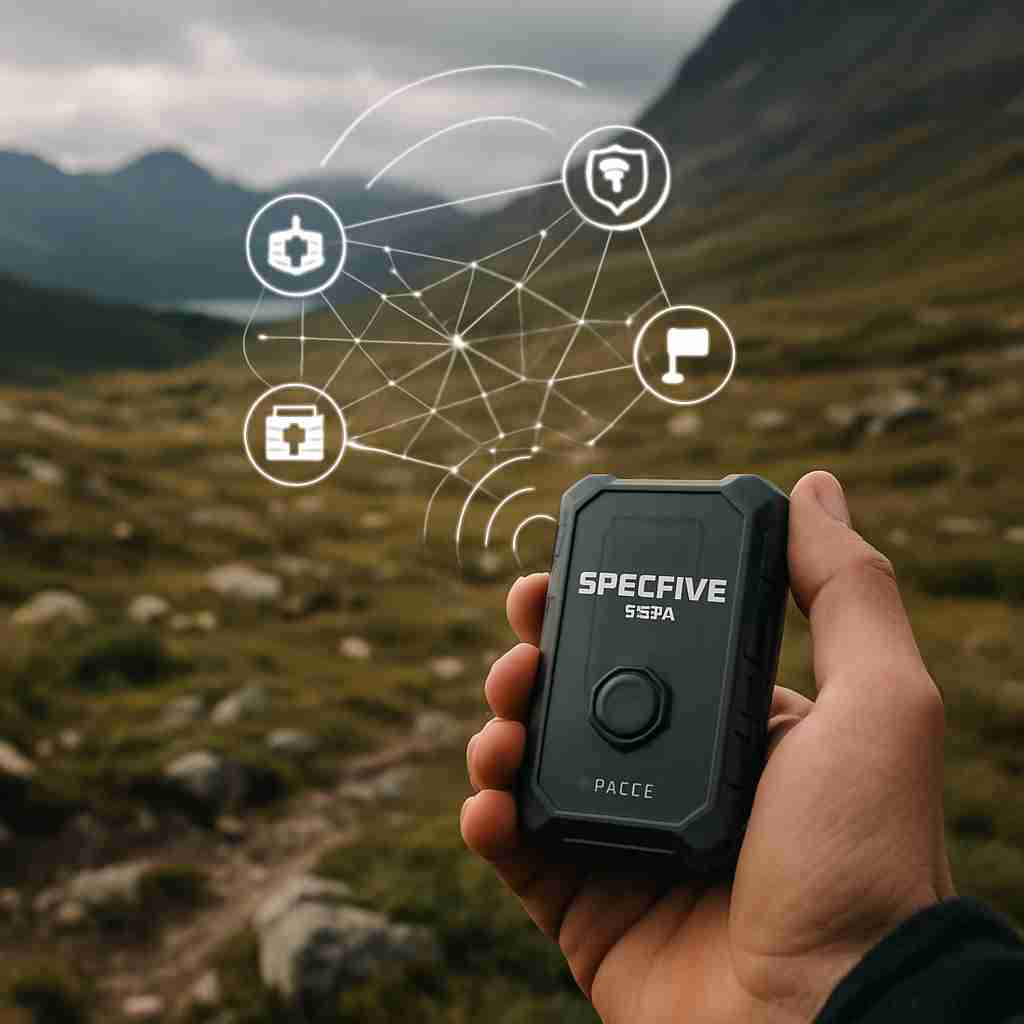
Off-grid GPS trackers, such as the Spec5 Trace GPS Tracker, represent a groundbreaking advancement owing to their capacity to operate independently of standard communication infrastructures. In situations like military missions or distant expeditions—where cellular signals simply don’t reach—these autonomous GPS monitoring devices prove indispensable. They leverage cutting-edge energy-optimized technology and harness renewable power sources, including solar panels, to guarantee ongoing performance even in locations without conventional electrical access. This energy autonomy is vital, allowing trackers to continuously transmit location data over long periods, thereby improving safety and mission effectiveness in remote settings.
Such power efficiency not only prolongs battery longevity but also lessens ecological impacts, aligning perfectly with the untouched environments often encountered by explorers and military teams alike. Integrating green energy GPS tracking systems assures users of dependable functionality for seamless communication. Furthermore, the rugged portable GPS unit design of the Spec5 Trace GPS Tracker endures demanding conditions, giving users confidence that their locator will remain operational no matter the obstacles. Ultimately, these remote GPS tracking solutions are critical for pushing the limits of exploration and tactical operations.
The Innovation of LoRa Mesh Networks
Combining LoRa wireless mesh tracking technology with devices such as the Spec5 Trace GPS Tracker transforms off-grid navigation tools. Renowned for its capability in long-distance wireless transmission, LoRa revolutionizes the transmission of small data packets across expansive areas, particularly from hard-to-reach spots. By employing sub-1 GHz radio frequency, it guarantees connectivity where traditional networks fail, while preserving low power consumption essential for remote GPS tracking.
In disaster-stricken regions or tough landscapes, LoRa’s decentralized communication framework boosts LoRa mesh system reliability. Unlike centralized networks where one failure point can interrupt connections, LoRa mesh networks balance the communication burden, allowing data to reroute through alternate channels if part of the network is damaged. This robustness is crucial for rugged portable GPS units like the Spec5 Trace GPS Tracker, ensuring continuous delivery of vital location information.
LoRa mesh technology bridges the divide between broad geographical distances and stable data transfer, effectively complementing GPS tracking by providing exceptional benefits in sustaining constant connectivity and operational productivity, even under the most demanding conditions.
Real-Time GPS Tracking and its Applications
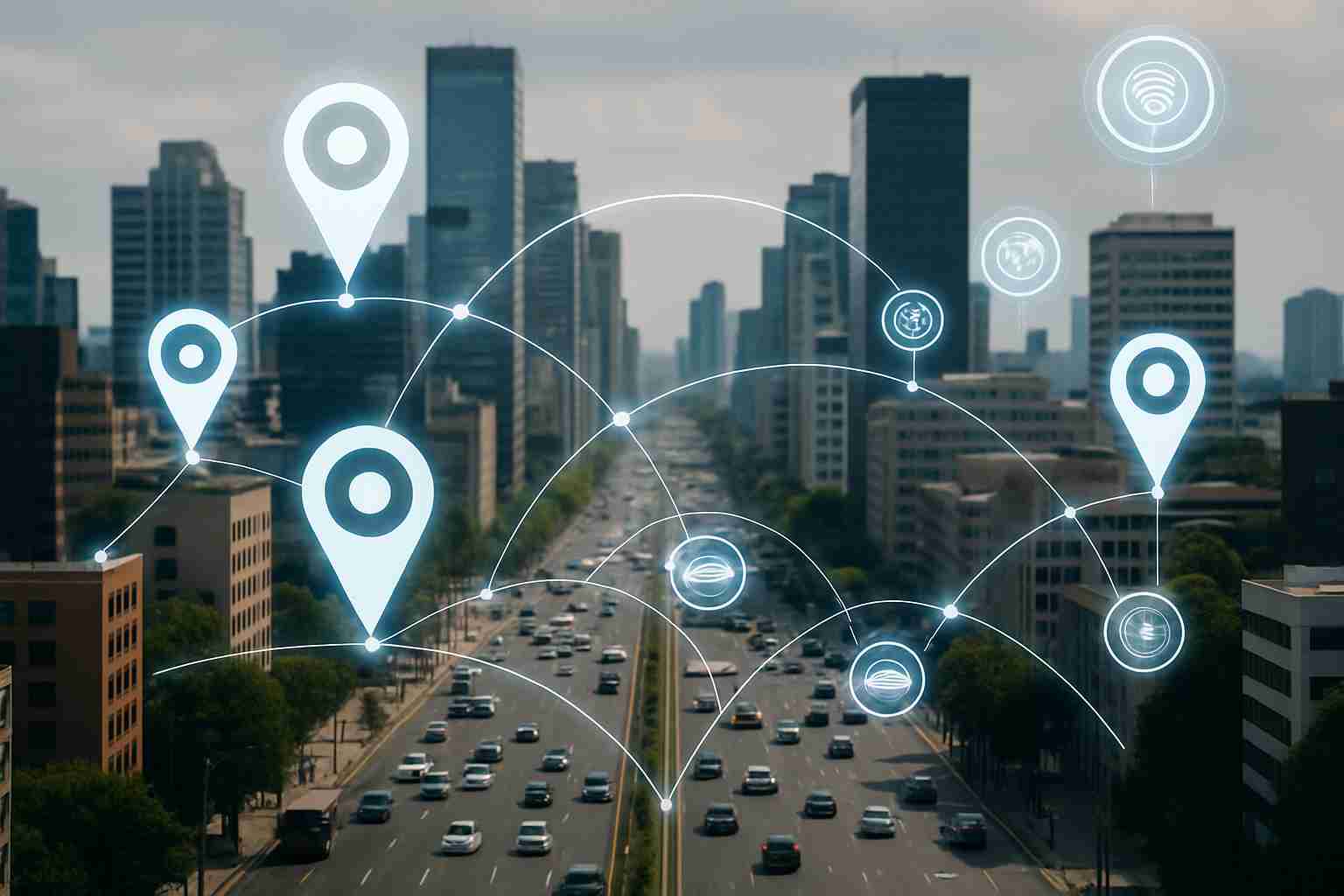
Live GPS monitoring has revolutionized various sectors and boosted personal security by delivering exact, instant location information. The Spec5 Trace GPS Tracker is a prime example of this innovation, providing exceptional precision and dependability. In contexts involving personal protection, having real-time awareness of someone’s precise whereabouts can prevent potential dangers and guarantee prompt aid. Within logistics, it streamlines processes by monitoring deliveries, cutting down on downtime, and enhancing fleet vehicle tracking technology. Commanders also gain from tactical military applications, as these offer a real-time perspective on unit locations that supports better strategic choices.
This innovation relies on space-based communication tracking and sophisticated algorithms that continuously refresh location data, ensuring minimal delay during transmission. Having immediate access to location updates dramatically enhances reaction times and decision-making in urgent scenarios. Be it rapidly deploying emergency responders or avoiding setbacks in cargo delivery, instant GPS location tracking ensures smooth and efficient operations. For both enterprises and individuals, sustaining continuous, stable connections strengthens safety, productivity, and tactical benefits. The existence of solutions like the Spec5 Trace GPS Tracker highlights how much live GPS position tracking has evolved in shaping today’s operational environments.
Extended-Range and Tactical GPS Trackers
Offering unparalleled reach and functionality in demanding settings, extended-range capabilities have become fundamental in crafting tactical GPS trackers. The Spec5 Trace GPS Tracker stands out by integrating cutting-edge technology that eliminates distance restrictions. Essential in scenarios such as search and rescue operations or remote scientific missions, its advanced GPS tracking technology ensures reliable location monitoring over vast areas.
In these contexts, the importance of preserving a reliable connection across extensive terrains cannot be emphasized enough. Whether tracking lost hikers amid thick woodlands or observing wildlife across broad savannas, the presence of a device supporting long-range GPS monitoring is pivotal. Employing state-of-the-art LoRa mesh network monitoring, the Spec5 Trace GPS Tracker sustains communication integrity for miles, overcoming typical limitations tied to conventional GPS systems.
Enhanced antenna engineering and sophisticated signal processing within such equipment enable accurate and consistent positioning even in rough or remote landscapes. These technological advancements transform the modern GPS tracker from a simple gadget into an invaluable strategic partner where every second holds significance.
Conclusions
Advanced-range navigation devices such as SpecFive Trace combined with LoRa wireless mesh tracking provide unmatched options for live GPS monitoring, long-distance coverage, and autonomous navigation devices. These technologies play a vital role in both civilian and military-grade navigation solutions, guaranteeing dependable location monitoring even under the harshest conditions. Adopting such cutting-edge innovations significantly boosts operational effectiveness and safety in scenarios where conventional technologies are insufficient.