

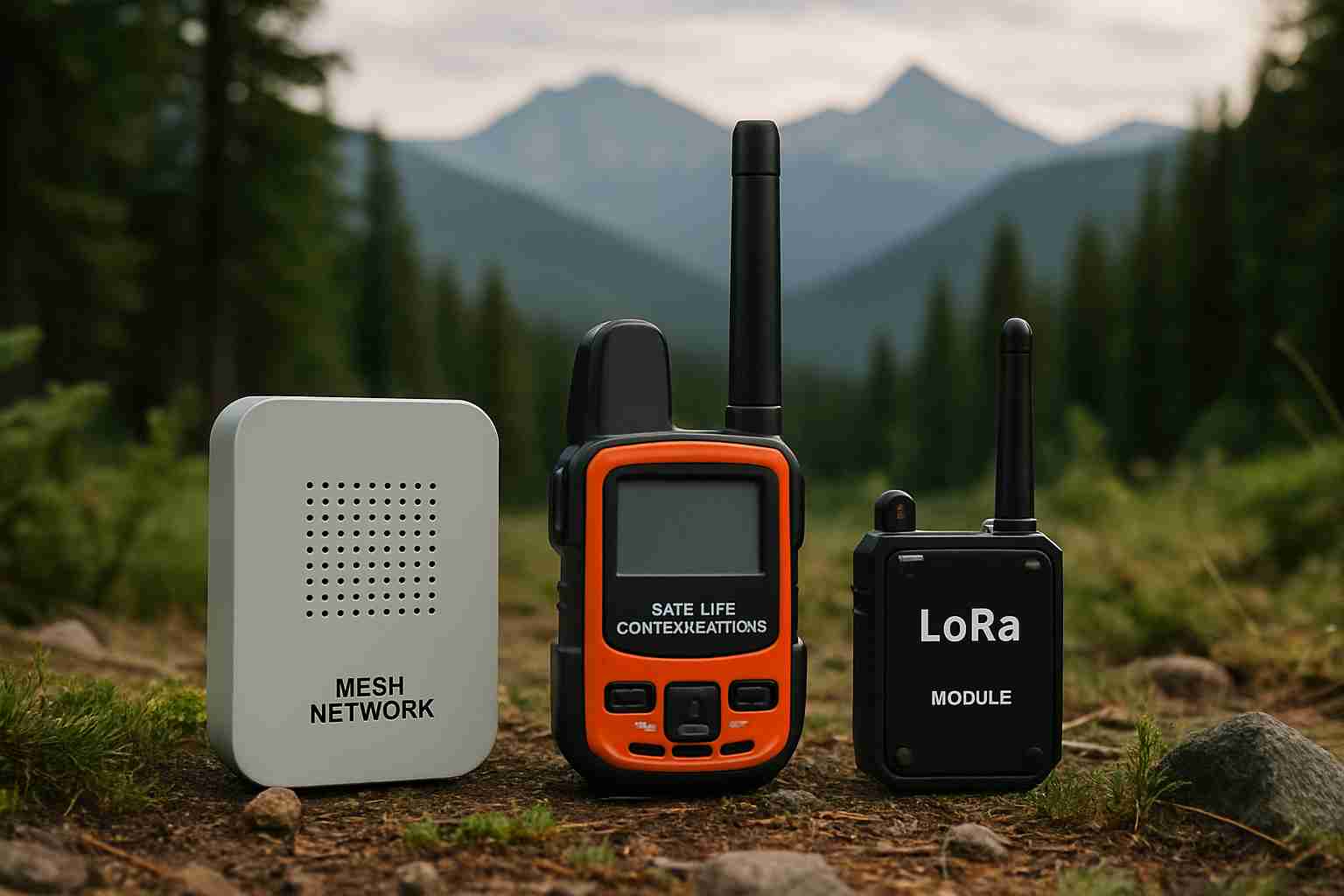
In our highly connected world today, maintaining communication in isolated locations or during urgent situations is vital. Autonomous communication technology such as wireless mesh networks, satellite communication terminals, and LoRa long-range wireless communication offer key connectivity options. This guide delves into these systems, their uses, and the ways they deliver dependable communication when conventional networks are inaccessible.
The Significance of Off-Grid Communication
In critical situations and isolated regions, staying connected becomes vital, highlighting why independent communication equipment are so essential. When natural catastrophes overwhelm standard networks, these devices serve as crucial lifelines. Picture a powerful hurricane tearing through an urban area, cutting off normal communication lines and throwing connectivity into disarray. In such cases, official announcements and urgent personal calls depend on alternative methods to close the gap caused by failing networks.
Remote communication tools prove invaluable during these crises, providing dependable connections to emergency coordination centers and loved ones alike. For adventurers exploring the planet’s most secluded trails, these self-sufficient communication devices maintain a vital link to safety, continuously reporting their location and enabling route adjustments when needed. Being free from reliance on conventional networks not only guarantees security but also promotes an orderly response. Relief shelters synchronize aid efforts, and individuals signal for help, transforming isolation into active participation. Whether operating through mesh networking systems or direct satellite communication hardware, these tools form an indispensable network, safeguarding the exchange of essential information and assistance.
Mesh Networking: A Web of Connectivity
Mesh networking systems mark a groundbreaking advancement in the field of independent communication equipment, delivering a robust and flexible answer to connectivity obstacles faced in isolated and urgent scenarios. Unlike conventional networks that hinge on a central point, these networks spread connectivity across multiple linked nodes. This configuration enables each node to exchange information with its adjacent nodes, forming a network structure that is both adaptive and equipped with network self-repair technology. Should a node malfunction or face interference, the system instantly redirects data through alternate routes, ensuring seamless communication.
The versatility of wireless mesh networks makes them highly suitable for numerous environments. They empower rural communities with dependable internet through rural broadband connectivity options. In military contexts, their durability guarantees continuous communication even under challenging or hostile conditions. During catastrophe relief messaging, their self-sustaining design facilitates swift setup of communication frameworks essential for effective emergency communication strategies.
This shift from fixed, centralized networks toward flexible, distributed network connectivity solutions exemplifies a wider progression in independent communication equipment, prioritizing dependability and versatility. By leveraging the strength of interconnected nodes, mesh communication technology is reshaping how connectivity is managed where it is most critical.
Satellite Communicators: Reaching Beyond the Horizon
In environments without cellular coverage, satellite communication terminals serve as a vital connection, ensuring contact where traditional networks fail. Whether navigating dense woods, crossing vast seas, or standing atop towering summits, these satellite comms equipment harness space-based communication technology to relay messages over extensive distances. Their dependence on a constellation of satellites orbiting the planet ensures worldwide reach, providing confidence in critical moments.
The major advantage of satellite communication systems is their capacity to function independently of physical infrastructure. Free from reliance on terrestrial towers, unlike conventional setups, they are perfectly suited for remote adventures and maritime ventures. They perform exceptionally well in perilous settings where maintaining communication is essential yet difficult.
Nonetheless, this space-based communication technology does face some hurdles. Signal delay can occur because messages need to travel to satellites in orbit and back to Earth. Additionally, service plans often require subscriptions, which might be expensive. Despite these challenges, for explorers in wild terrains and those at sea, the advantages significantly overshadow the downsides. Satellite communication devices establish a crucial link to the external world, enhancing safety and coordination when other communication methods prove inadequate, making them indispensable off grid communication devices for those venturing into unknown lands.
LoRa Technology: Long Range, Low Power
LoRa (Long Range) technology remains a fundamental pillar in the domain of independent communication equipment, delivering unmatched distance coverage alongside exceptional energy efficiency. Excelling in the IoT field, this wireless connectivity technology expertly spans vast areas while consuming very little power. It is perfectly suited for scenarios where conventional connections prove inadequate, such as distributed environmental surveillance or remote ecological monitoring.
Utilizing a spread-spectrum method, the core protocol behind LoRa wireless communication facilitates extended-distance links and enhances resistance to interference — a vital trait for independent communication equipment. Its advantages are evident in smart agriculture applications, tracking crop vitality and soil quality, as well as in industrial automation, where it relays information from machinery located in secluded sites.
Offering significant benefits with its extensive battery endurance, LoRa is crucial for solar-powered connected devices deployed in remote areas. This extended operational lifespan guarantees dependable functioning even in hard-to-reach regions. Sectors like forestry, farming, and distant infrastructure rely heavily on this dependable, eco-friendly technology. As the need for energy-efficient wide area networks continues to rise, LoRa’s importance in linking devices beyond conventional network ranges grows ever stronger, ensuring uninterrupted data transmission in even the most isolated environments.
Innovations in Emergency Communication
The way first responders and NGOs handle crisis scenarios is being transformed dramatically by innovations in urgent messaging platforms. A notable breakthrough is the creation of portable and durable independent communication equipment, enabling uninterrupted connectivity even where conventional infrastructure is lacking. These tools leverage distributed mesh network solutions, satellite telecom systems, and LoRa wireless communication to build robust communication frameworks capable of maintaining function throughout emergencies.
In situations where infrastructures are damaged, mesh networking systems shine by forming adaptable and self-repairing network systems. Satellite communication terminals offer coverage at distant sites by connecting directly to satellites, guaranteeing that teams remain reachable despite the absence of ground networks. Complementing these, LoRa wireless technology delivers low-energy wide area network capabilities for extensive, energy-efficient communication between devices. Collectively, this combination constitutes an all-encompassing and flexible communication approach essential for streamlined crisis management communication.
Looking forward, upcoming trends in disaster communication technology are expected to feature AI-driven crisis communication strategies and deeper incorporation of IoT extended range connectivity with independent communication equipment. These advancements are set to enhance the speed and dependability of data exchange, accelerating crisis response times and potentially saving more lives.
Conclusions
Autonomous communication technology such as wireless mesh networks, satellite communication systems, and LoRa connectivity are redefining connectivity outside conventional networks. They guarantee consistent information exchange in the most critical moments by offering robust solutions for isolated locations and crisis scenarios. As these technologies progress, they will play an increasingly vital role in improving coordination and safety in demanding environments.